Medicine, Da‘wah, and Disciplined Service
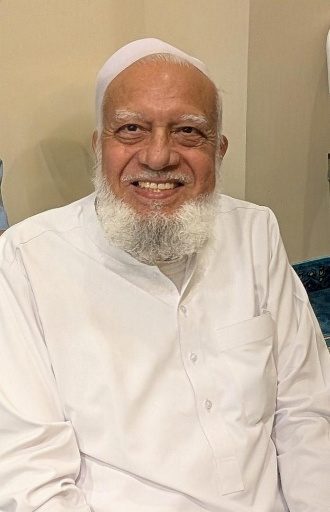
Long before Baltimore’s Muslims had a permanent masjid, school, professional staff, or established campus, a small group of families gathered in modest apartments with an extraordinary purpose. Among them was a young physician named Dr. Javaid M. Shafi, whose early footprints became part of the foundation upon which the Islamic Society of Baltimore was built.
Born around 1942 in Pakistan, Dr. Shafi graduated from King Edward Medical College in Lahore in 1964. He later came to the United States and completed his internal-medicine residency at the University of Maryland Medical System. When the Islamic Society of Baltimore (ISB) was taking shape in 1969, he was a young resident physician balancing the demanding responsibilities of medicine with an equally serious commitment to Islam and community service.
Dr. Shafi lived near the Sarril Road Apartments, where several Muslim professionals and their families had settled. Among his neighbors and associates were Dr. Tarique Firozvi, Dr. Mohamed Shami, Dr. Nawaz Khattak, Dr. Ibrahim Syed, and others. Their apartments became temporary classrooms, prayer spaces, meeting halls, and planning offices.
The families gathered to recite and explain the Qur’an, hold Sunday religious programs, organize Eid prayers, educate their children, raise funds, and discuss the need for a permanent masjid. They understood that professional success alone would not preserve their children’s Islamic identity. If Islam was to survive and flourish in Baltimore, someone had to organize the community, teach the faith, and build institutions for generations they might never live to see.
Oral testimony preserved through Golden Age Village events places Dr. Shafi among those actively carrying out this early work. He participated in formative discussions with Dr. Tariq Firozvi, Dr. Shami, Dr. Ibrahim Syed, and visiting scholar Dr. Ahmad H. Sakr. Although the precise sequence of events remains subject to memories recorded many decades later, Dr. Shafi’s presence within the founding circle is firmly established.
As happens in nearly every young institution, the pioneers occasionally encountered disagreements. They were strong personalities working under pressure, without established procedures, sufficient resources, or a permanent home. At times, sincere differences over direction and responsibility created difficulties among members of the team. Yet wisdom ultimately prevailed. They listened, consulted, restrained personal feelings, and placed the future of the community above individual positions. Their ability to settle differences with maturity allowed the mission to continue.
Dr. Shafi later served as ISB’s third president and remained a leading figure during the 1979 period. His presidency was not the administration of an established campus; it was institution-building before Masjid Al-Rahmah existed. ISB still operated primarily through gatherings at Johns Hopkins University. Leadership meant maintaining weekly programs, organizing Sunday school, coordinating Eid prayers, raising money for a permanent masjid, strengthening Muslim families, and responding to widespread misunderstanding of Islam.
His da‘wah extended beyond the South Asian immigrant community. Dr. Shafi and other early ISB leaders developed relationships with Baltimore’s African American Muslims at Masjid as-Saffat and Masjid Muhammad, now Masjid ul-Haqq. During the 1970s, Dr. Shafi met Qasim Burmi, a Muslim from Burma, and helped bring him to the United States to teach Islamic education among Baltimore’s Muslims. Qasim Burmi was the first Quran teacher at the Masjid Al-Rahmah for many years and later moved to the Islamic Society of Western Maryland in Hagerstown. It was a decisive act that reflected his disciplined approach to da‘wah: when the community needed knowledge, he did more than discuss the problem—he helped bring a teacher.
In 1979, during the period associated with Dr. Shafi’s leadership, Baltimore’s diverse Muslim communities reportedly gathered for their first joint Eid prayer at Masjid Muhammad. The occasion represented an important step toward cooperation across racial, cultural, and national boundaries.
Dr. Shafi carried the same sense of duty into medicine. For more than five decades, he served patients in Baltimore with an emphasis on ethics, human dignity, patients’ rights, and compassionate care.
At home, Dr. Shafi and his family built another enduring institution. He raised three accomplished daughters and three gifted sons. All six children pursued higher education, entered their respective professions, and established independent lives. Their accomplishments reflected a household in which education was expected, faith was practiced, and success was measured not only by professional standing but also by character, responsibility, and service.
Dr. Shafi’s legacy is found in the patients he treated, the children he raised, the teachers he supported, and the Islamic institution he helped establish when its future was still uncertain. His consistent work reflects Allah’s command:
“Invite to the way of your Lord with wisdom and good instruction, and reason with them in the best manner.” Surah An-Nahl, 16:125
Dr. Javaid Shafi did not wait for ideal circumstances before serving. He worked with what was available, remained firm when the road was difficult, and helped transform a small circle of Muslim families into an organized community rooted in faith, education, da‘wah, and service.