
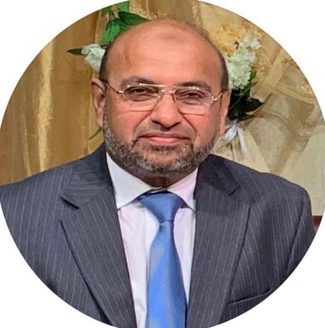
Life of service, Humility & Harmony
When Syed Anwarul Haq arrived in the United States in 1986, he carried little more than determination, discipline, and a quiet belief that serving people was the most dignified form of worship. Over the next three decades, he built a life in Maryland that reflected exactly that—steady professional excellence paired with unwavering community service.
By day, he worked as a chemist with the Maryland Department of Health, contributing to environmental and public health laboratory science. His work was meticulous, often unseen, yet essential protecting the wellbeing of millions through careful monitoring, testing, and regulatory precision. Those who worked with him admired his discipline, kindness, and the calm dignity with which he approached every task.
But it was after office hours that the fuller picture of Syed Anwarul Haq emerged.
At the Islamic Society of Baltimore (ISB), he became a pillar of community life. Whether organizing programs, supporting families, or guiding new volunteers, he carried himself with humility and respect. Seniors knew him as the gentle brother from the Golden Age Village programs who always remembered their needs. Women and children recognized him as the soft-spoken uncle who made sure everyone felt safe, included, and valued. Even those with physical challenges found in him a patient advocate who never let anyone feel left behind.
And of course, there was his famous Hyderabadi warmth.
One afternoon, while arranging chairs for a community event, a young volunteer rushed in late and breathlessly.
“Uncle, sorry, traffic was too much!”
Syed Anwarul Haq smiled and replied in classic Hyderabadi style,
“Arre miya, traffic ka naam mat lo… woh toh Hyderabad se bhi zyada nakhre dikhata! Bas aa gaye na, kaiku tension lete?”
The whole room burst into laughter, the tension instantly melting away.
For several years, he organized and ran the Urdu Qur’an tafseer sessions led by the late Maulana Mateen Nomani رحمه الله. These gatherings became a spiritual anchor for many families, blending scholarship with accessibility, and nurturing a culture of learning rooted in humility.
At home, he raised a family that mirrored his values. One daughter became a pharmacist, the other pursued computer science, and his son‑in‑law, Jamal Ali, stepped into leadership as part of ISB’s younger generation—continuing the legacy of service with a finance background and a commitment to community uplift.
Through every chapter of his life, Syed Anwarul Haq embodied the Qur’anic call to compassion and service:
“And do good, so that you may be successful.” (Surah Al‑Hajj 22:77)
His story is not one of grand speeches or public spotlight. It is the story of a man who served quietly, consistently, and with a heart softened by faith—bringing harmony among people, easing burdens, and reminding everyone around him that kindness, when practiced daily, becomes a legacy.