
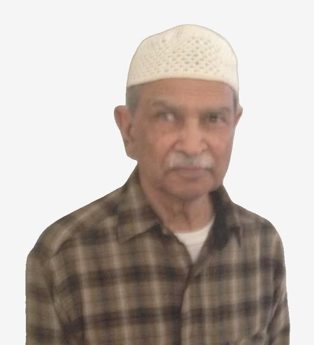
The Light That Traveled Far
In the shadow of the Himalayas, in a town laced with orchards and faith, a boy named Muhammad Saied was born. The year was 1930, and though life would soon test him—losing his father at the tender age of five—his spirit was already woven with grit.
Partition came like thunder across the land, and young Saied, with his family, was swept into the tides of history, resettling in Lahore. Among the city’s chaos and uncertainty, Saied bloomed—quietly but relentlessly. He studied not just to excel, but to uplift. Those who watched him saw not just a student, but a future bridge between generations.
That bridge would span oceans. With a scholarship earned through pure perseverance, Saied boarded a ship to London to study chemical engineering. He returned not with airs of grandeur, but with a sharpened purpose. He wanted to build—not just factories, but futures.
From Wah Cantonment, a modern and sophisticated arms manufacturing facility to the corridors of Bata Shoe Factory in Ontario, his journey threaded through Pakistan, Canada, and finally, the United States, where he planted roots in Glen Burnie, Maryland. There, amid a modest suburban life, he gave more than he ever took.
He and his beloved Jamila nurtured a household not of extravagance but of richness in values. Their home echoed with Qur’anic recitation, gentle reminders about education, and the humming of dreams, especially for their three children.
Yet Sheikh Saied’s heart was always bigger than his household. With a quiet, disciplined hand, he taught Qur'an to community children and invested frugally so he could give generously.
When his soul returned to its Maker on May 16, 2021, he left no void—only light. A light that continues to illuminate prayer circles, schoolrooms, and hearts. A man who began life in scarcity ended it by giving everything away—not out of obligation, but out of love.
Sheikh Saied & Jamila and Sons Trust
In 2013, he distilled a lifetime of labor into a single act of legacy: a charitable trust for Muslim girls’ education—academic and spiritual alike. He didn’t just believe in change; he seeded it.
And what is a life well-lived, if not this?