
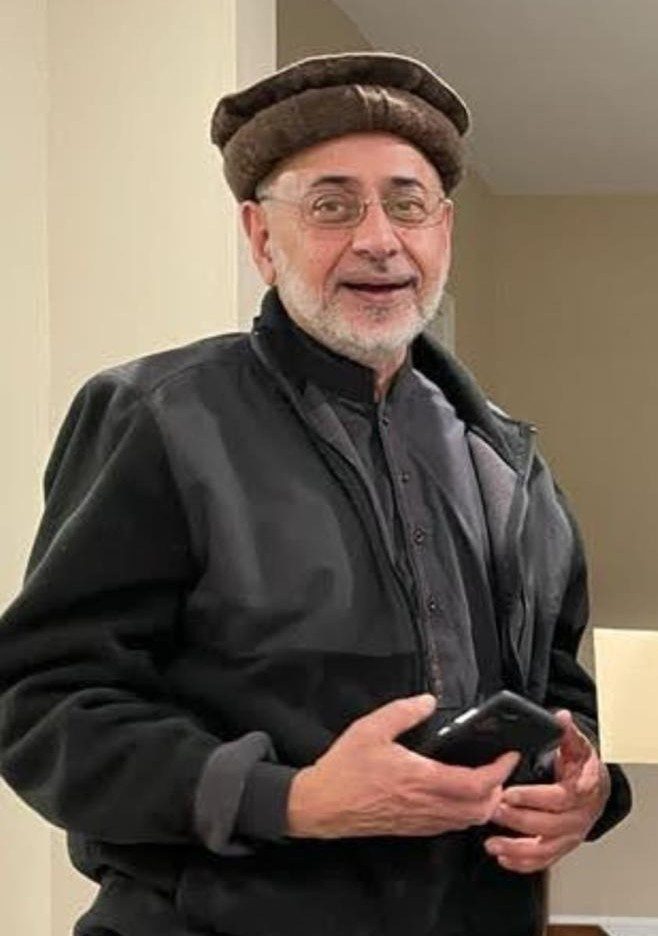
The Quiet Guardian of Our Elders
When Mohammad Saleem first arrived in the United States in 1980, landing in Washington, D.C., he carried with him nothing but faith, determination, and the quiet hope of building a better life.
For more than four decades, Mohammed Saleem has served the Islamic Society of Baltimore with remarkable humility and consistency. Since 2010, he has also devoted himself to the Golden Age Village, caring for the community’s elders with patience, attentiveness, and genuine affection.
His service extends beyond providing physical assistance. He offers emotional reassurance, companionship, and the dignity and respect every elder deserves. He listens carefully, notices what others may overlook, and steps forward whenever help is needed.
Among the seniors of the Golden Age Village, Mohammed Saleem is affectionately recognized as the group’s master chef and meal planner. Whether the community is organizing a luncheon, an outdoor trip, or a special gathering, the food arrangements are rarely finalized without consulting him.
He carefully plans meals and snacks that are nutritious, satisfying, and prepared with the warmth of home. For Saleem, feeding the elders is more than a responsibility—it is another expression of love, hospitality, and service.
Together with his wife, Mohammed Saleem raised two children—Sahar Saleem, their daughter, and Umar Saleem, their son. He raised his family through years of personal sacrifice, often while living on a fixed income and carefully managing the responsibilities of home, work, and community service.
The same spirit of volunteering has now passed to the next generation. His son, Umar Saleem, serves on the ISB Council in a leadership role, carrying forward the family’s commitment to the masjid and its community.
Mohammed Saleem has never sought applause, recognition, or public attention. He works quietly, motivated by the pleasure of Allah and the opportunity to serve the elders who helped build the community.
His life reflects a form of jihad that is often overlooked: the patient and persistent struggle to provide for one’s family, support the community, care for its seniors, and remain faithful through financial limitations and personal challenges.
He does not measure his contribution through titles or public praise. He measures it through the people who were fed, the elders who felt respected, and the burdens made lighter because he was present.
His life reminds us of the command of Allah in the Qur’an:
“And We have enjoined upon man [care] for his parents. His mother carried him, [increasing her] in weakness upon weakness, and his weaning is in two years. Be grateful to Me and to your parents; to Me is the [final] destination.” Surah Luqman, 31:14
Although this verse speaks directly about honoring one’s parents, its spirit also embraces the responsibility of caring for the elderly with gratitude, gentleness, and compassion.
In a nutshell, the Golden Age Village cannot imagine planning an event or meal without Mohammad Saleem’s involvement. His story is a quiet reminder that true heroes do not always stand in the spotlight—they are often those who serve with humility, lifting others through their kindness.
Mohammad Saleem’s legacy will forever be remembered not only among the elders he serves, but also through the children he raised—continuing the cycle of service for generations to come.