The American Muslim Awakening
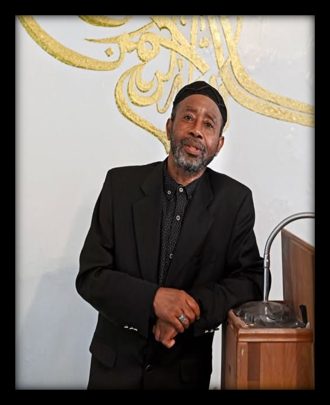
In the heart of West Baltimore, where row homes stood like sentinels of history and resilience, Imam Earl El-Amin walked with quiet purpose. Raised in the very streets he now served, his journey from Morgan State University to the pulpit of the Muslim Community Cultural Center of Baltimore (MCCCB) was not one of ambition, but of devotion.
For over three decades, Imam El-Amin had been a lantern-bearer for the Deen Al-Islam, illuminating paths for educators, theologians, and social workers across the nation. His workshops were more than lectures—they were healing circles, where faith met scholarship and where the soul of Islam was presented not as foreign, but as deeply American.
But the road was never smooth.
He had inherited a legacy of transformation, one shaped by the bold vision of Imam W. Deen Mohammed, the son of Elijah Muhammad, who courageously led the largest indigenous group of Muslims in America toward mainstream Sunni Islam. Imam Mohammed’s shift was seismic—he preached unity, Qur’anic literacy, and a return to the universal message of Islam. And Imam El-Amin, a young leader then, stood beside him.
Together, they travelled abroad, representing Muslim American interests in lands where minarets pierced the sky. Imam El-Amin was present during the historic dialogue between Imams and Rabbis in North America, a moment that echoed the Qur’anic call:
“O mankind, We have created you from male and female and made you peoples and tribes that you may know one another.” Surah Al-Hujurat (49:13)
This verse was not just recited—it was lived. Imam El-Amin’s interfaith work, from Rome to Baltimore, was a testament to this divine mandate. He stood at Mayor Brandon Scott’s swearing-in, offering an invocation of unity. He collaborated with Johns Hopkins during the pandemic, ensuring safe worship. He testified before the Maryland General Assembly, advocating for youth protection. Always, his voice was one of “love and reconciliation.”
Yet, behind the public appearances and CSPAN interviews, there were quiet struggles. Misunderstandings. Misrepresentations. The burden of representing Islam in a time of suspicion. But Imam El-Amin never wavered. He believed in model neighborhoods, in Muslims thriving in business, education, and culture. He believed in the power of story, of legacy, of faith.
At MCCCB, he was more than a khatib—he was a father to the community. His Jumu‘ah sermons braided Qur’anic wisdom with Baltimore’s heartbeat. His work with NCIA uplifted hundreds. His presence reminded all that Islam was not just in the masjid—it was in the classroom, the courtroom, the city council.
And when he spoke of Imam W. Deen Mohammed, his voice softened. “He gave us permission,” he once said, “to be fully Muslim and fully American. To walk with the Qur’an in one hand and civic duty in the other.”
This story honors Imam Earl El-Amin's decades of service and his commitment to Islamic orthodoxy, community development, and interfaith bridge-building in Baltimore.