The Dreamer's Journey
The train whistle echoed across the dusty platform of Shahpur as young Sajid clutched his grandfather's weathered hand. It was 1957, and the world was changing. Syed Sajjad Husain, a man who had once supplied food to the British army and owned vast farmlands stretching beyond the horizon, now carried only hope and determination as they boarded the train to Pakistan. The contractor who had generously donated to Muslim causes and stood shoulder-to-shoulder with Muslim League leaders was leaving everything behind for the promise of an independent homeland.
"Beta," his grandfather whispered as the train pulled away from their ancestral village in Fatehpur district, "education will be your real inheritance. Land can be lost, but knowledge travels with you wherever you go."
Those words would echo through Sajid's life like a sacred prayer.
Years later, in the bustling city of Faisalabad, Sajid buried himself in books with the same devotion his grandfather had shown to the independence movement. The University of Agriculture Faisalabad became his second home as he pursued his pharmacy education, later earning his MSc with honors. But like his grandfather who had never settled for mediocrity, Sajid's dreams stretched beyond the familiar boundaries of Pakistan.
Punjab University, Lahore, was just another steppingstone. When the acceptance letter from Johns Hopkins University in Baltimore arrived in the late 1970s, Sajid's family gathered around the worn wooden table where they shared meals and dreams. His grandfather, now aged but still sharp-eyed, smiled with pride as Sajid read about his Master’s in Administrative Science program.
"Allah has blessed you with wings, beta. Now fly."
Baltimore was a world away from the wheat fields of Punjab, but Sajid carried his values like a compass. While pursuing his MAS degree, he found himself drawn to a small group of Muslim students who gathered for Friday prayers in a cramped university room. Together, they dreamed of something bigger—a place where the growing Muslim community could gather, worship, and preserve their faith for the next generation.
"We need more than just a prayer room," Sajid would say during their late-night planning sessions. "We need a home."
The Islamic Society of Baltimore (ISB) began as an idea shared over cups of chai and homesick conversations. But through their collective determination—and Sajid's organizational skills honed at Johns Hopkins—it grew into an institution that would serve thousands of Muslims across the Metro Baltimore area for decades to come.
Yet even as he established himself professionally with a comfortable position at a pharmaceutical company, Sajid felt the familiar restlessness that had driven his grandfather to support the independence movement. Education, always education, called him like a siren song.
"I want to become a doctor," he announced to his family one evening, the same quiet conviction in his voice that his grandfather had used when deciding to migrate to Pakistan.
The decision seemed impossible to outsiders. Leave a secure job with benefits? Start over in medical school in the Dominican Republic, grappling with language barriers and economic uncertainties? But those who knew Sajid understood: this was not impulsiveness, but the methodical pursuit of excellence that his grandfather had instilled in him.
The medical school years tested every fiber of his being. Foreign languages twisted on his tongue, finances stretched thin, and family obligations pulled him in different directions as they moved between countries. But each obstacle was met with the same response his grandfather had shown during partition: unwavering faith and relentless effort.
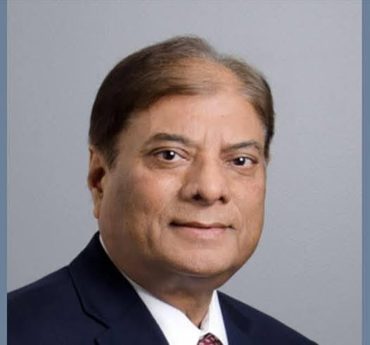
When Dr. Syed Sajid Husain finally held his medical degree in the late 1980s, it represented more than personal achievement. It was the culmination of dreams that had begun in a small village in Uttar Pradesh, nurtured through displacement and hardship, and realized through decades of sacrifice.
Buffalo, New York, became his next chapter. The VA hospital welcomed his expertise in nuclear medicine radiology, but Dr. Husain's impact extended far beyond the hospital walls. Just as he had helped establish the Islamic Society of Baltimore, he joined hands with fellow Muslim professionals in Buffalo to create the Islamic Society of Niagara Falls (ISNF).
"Every community deserves a place where children can learn both their Deen and their Dunya," he would tell the construction workers as they laid the foundation for the beautiful masjid and school in the late 1990s. The building rose from the ground like a testament to the power of collective vision and individual commitment.
His weekends were spent not on golf courses or vacation homes, but in community centers and friends' living rooms, helping recent immigrants navigate the complexities of American lifestyle. His house became a waystation for students, job seekers, and anyone who needed guidance from someone who had walked the path from immigrant to professional success.
But perhaps his most personal project was "Gum-Naam Sipahi" (گمنام سپاہی), the book he meticulously compiled about his grandfather's life. Page by page, he documented Syed Sajjad Husain's journey from British contractor to independence supporter, from landowner to refugee, from established patriarch to hopeful immigrant. It was more than biography; it was a love letter to the man who had shaped his values and vision.
"He was an unsung soldier," Dr. Husain would explain to anyone who asked about the title. "He fought for Pakistan with his resources, his influence, and his sacrifice. The least I can do is ensure his story isn't forgotten."
His son's achievements in education filled Dr. Husain with the same pride his grandfather had shown watching him succeed. The cycle continued—each generation building on the shoulders of the previous, reaching higher while maintaining the same fundamental values of service, learning, and community responsibility.
After more than four decades of service, Dr. Husain made his final migration: back to Baltimore, where grandchildren awaited his stories and wisdom. He had come full circle, returning to the city where he had first tasted American dreams and helped build institutions that would outlast his own lifetime.
The phone call came at midnight October 20th 2024, sudden and final. Dr. Syed Sajid Husain had suffered a heart attack, his journey was complete at 75 years of age. But in the Masajid of Baltimore and Buffalo, in the medical facilities where he had healed patients, in the community organizations he had helped establish, and in the countless lives he had touched with his generosity and guidance, his legacy lived on.
His funeral was attended by physicians and pharmacists, by community leaders and recent immigrants, by childhood friends from Faisalabad and colleagues from Johns Hopkins. They came not just to mourn, but to celebrate a life that had embodied the best of both worlds—the Islamic values of service and brotherhood, and the American dream of education and achievement.
As the imam led the janazah prayer, spoke of a man who had never forgotten where he came from, who had used his blessings to lift others, and who had remained humble despite his achievements. Dr. Syed Sajid Husain had been many things: a dreamer who became a healer, a student who became a teacher, an immigrant who became a community builder.
But perhaps most importantly, he had been his grandfather's worthy successor—another unsung soldier in the ongoing battle for dignity, education, and service to humanity.
"And give good tidings to those who believe and do righteous deeds that they will have gardens beneath which rivers flow." – Quran 2:25
May Allah grant Dr. Syed Sajid Husain the highest ranks in Jannatul Firdous. May his legacy inspire future generations to pursue excellence while serving their communities. Ameen.