
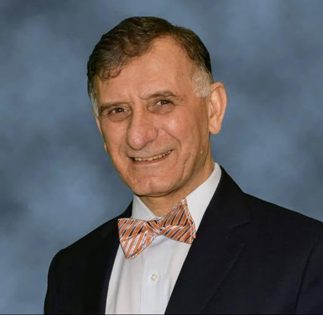
Life of Trust, Built Step by Step
Suhair Al Khatib’s journey has never been hurried. It has been deliberate—shaped by responsibility, guided by faith, and sustained by a belief that trust is a divine obligation, not a personal achievement.
His professional life began in Baltimore, Maryland, when he joined the Maryland Transit Administration (MTA) in 1988. For seventeen years, he worked within the backbone of Maryland’s transportation system, learning early that infrastructure is not merely concrete and steel—it is amānah, a trust carried on behalf of millions of lives. Safety, to him, was never theoretical; it was moral.
In 2005, Suhair assumed greater responsibility as Manager of the Capital Program at the Maryland Transportation Authority, overseeing long-term planning and funding for hundreds of projects across the Washington–Baltimore corridor. For nearly a decade, he balanced fiscal discipline with public need, guided by the principle that justice in planning is a form of service.
That path of steady accountability culminated in 2014, when he was appointed Deputy Administrator and Chief Planning, Programming & Engineering Officer of the Maryland Transit Administration, also serving as Head of Information Technology and Commuter Bus Services. Between 2014 and 2018, he helped guide one of the largest transit agencies in the United States—overseeing 113 million annual passenger trips, directing engineering, construction, planning, IT, and commuter services, and stewarding billion-dollar operating and capital budgets with quiet resolve.
Later, from 2020 to 2023, the State of Maryland entrusted him with further responsibility: Commissioner on the Washington Metrorail Safety Commission. There, away from public attention, Suhair participated in the vigilant oversight of rail safety—reviewing systems, questioning assumptions, and reaffirming that human life is never negotiable.
Yet while his civic service unfolded in public institutions, the spiritual center of Suhair Al Khatib’s life was being built in parallel. Since 2010, he has served as President of the An-Nur Foundation of Maryland. To him, the masjid is not merely a place of prayer—it is a school of identity. Under his leadership, An-Nur has become a place where children learn who they are, where youth are guided with discipline and mercy, and where families find spiritual shelter in an uncertain world.
Those who hear Suhair speak remember not speeches, but reminders. He speaks often of trust, of teamwork, and of responsibility shared. He emphasizes that a masjid must be a place of dawah through action, where Islam is witnessed through service, kindness, and consistency—especially by neighbors of other faiths.
“Allah will raise those who have believed among you and those who were given knowledge by degrees.” Surah Al-Mujādilah (58:11)
This belief—that faith and knowledge rise together—shapes his deepest investment: the next generation. Youth programs, Islamic education, family nights, and mentoring are not side projects at An-Nur; they are its foundation. Suhair understands that children raised with clarity, confidence, and compassion will carry Islam forward more powerfully than institutions ever could alone.
Interfaith engagement flows naturally from this vision. Whether through his service on the B&O Railroad Museum Board, his transit leadership, or his masjid work, Suhair builds bridges quietly—between faiths, neighborhoods, and civic life—demonstrating that Muslims belong fully and confidently in the public square.
Those who work alongside him describe a man who is calm, deliberate, and deeply principled—someone who believes that leadership means being present when it matters and invisible when it doesn’t.
In a time when communities search for anchors, Suhair Al Khatib remains one—steady, faithful, and committed to ensuring that Islamic values of trust (Amanah), justice, safety, knowledge, and responsibility are not merely spoken, but lived and passed on.
For him, educating youth is not preparation for the future alone. It is an act of worship in the present. And when learning is rooted in faith, communities do not merely survive—they rise.