
The Lantern of Two Worlds
In the quiet hours before Fajr, Muhammad Zia Khan would rise, his heart steady with gratitude. The soft rustle of his prayer rug, the whisper of Bismillah, and the echo of Allahu Akbar in his chest reminded him of the verse his mother used to recite:
“Say, indeed, my prayer, my rites of sacrifice, my living and my dying are for Allah, Lord of the worlds.” Surah Al-An’am (6:162)
Born in Pakistan, Zia’s journey began with a dream not of power, but of service. After passing the Comparative Public Service Commission exam, he entered law enforcement with a Qur’anic compass:
“O you who have believed, be persistently standing firm in justice, witnesses for Allah.” Surah An-Nisa (4:135)
His work in Bosnia-Herzegovina, amid the ruins of war, was not just about rebuilding police forces, it was about restoring dignity. He listened to widows, documented atrocities, and prayed silently for the souls lost to hatred. In every investigation, he saw echoes of the Prophet’s ﷺ mercy in Medina, where justice was tempered with compassion.
When he moved to the United States in 2000, it was not escape—it was Hijrah with purpose. He wanted his children to walk in both worlds: rooted in faith, fluent in opportunity. In Baltimore County, he joined the Citizens Advisory Committee, advocating for Muslim families, ensuring their voices were heard in classrooms and policies. His children thrived, graduating from McDonogh School, their hearts carrying the dua of their father:
“My Lord, grant me from Yourself a good offspring. Indeed, You are the Hearer of supplication.” Surah Al-Imran (3:38)
Zia’s service continued across continents—Liberia, Lebanon, Nepal, Darfur. Each mission was a prayer in motion. In Sudan, he taught local officers about human rights, often beginning sessions with the Hadith:
“Help your brother, whether he is an oppressor or oppressed.” Sahih al-Bukhari
He explained that helping the oppressor meant guiding him away from injustice. His colleagues, from diverse faiths, respected his integrity and the quiet strength of his character.
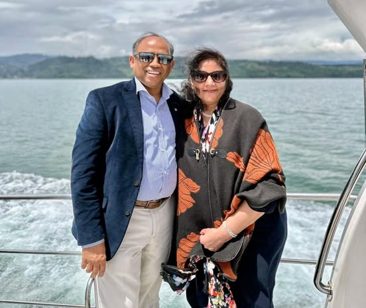
But Zia’s greatest mission was at home. His wife, the silent architect of their family, managed the rhythms of life with grace. She was the GPS, he often said, guiding their children through exams, emotions, and Eid preparations. Their home was a sanctuary of Barakah, where Qur’an recitation mingled with laughter, and where every milestone—graduation, promotion, even a simple family dinner—was marked with:
“All praise is due to Allah.”
In 2023, Zia stood at NUST Islamabad, addressing young cadets.
“Peace,” he said, “is not just the absence of war. It is the presence of justice, humility, and love. It begins in your heart, in your home, and in your community.”
He quoted the Prophet ﷺ:
“The best of people are those that bring most benefit to the rest of mankind.” Musnad Ahmad
Zia continues to guide, inspire, and share his wisdom through teaching and mentorship. His legacy extends far beyond official reports or institutional reforms—it lives in the lives he shaped, the children he nurtured, and the communities he empowered. His journey shines like a lantern, illuminating both the path of disciplined service and the warmth of unwavering faith.
And every morning, before the sun rises, he still whispers:
“My Lord, make me an establisher of prayer, and [many] from my descendants. Our Lord, accept my supplication.” Surah Ibrahim (14:40)