The Bridge Builder
In 1975, young Bashar Arafat wandered through the historic streets of Damascus, retracing the footsteps of generations of scholars who had walked those same paths. The city’s minarets stood tall against the skyline, and in the masjid courtyards, the recitation of the Quran echoed with wisdom that transcended time.
As a university student at Damascus University, Bashar Arafat dedicated himself to Islamic Studies, Arabic Language, and Islamic Law. However, it was his mentorship under Grand Mufti Ahmad Kuftaro that profoundly shaped his perspective on faith. He learned that faith’s true purpose was not to create barriers, but to build bridges between people.
During his early years as an imam in Damascus, Bashar Arafat realized that leading a community went beyond delivering sermons. It required attentive listening, serving those in need, and recognizing the divine spark within every human being. The guidance of the Quran was central to his approach:
"O mankind, indeed, We have created you from male and female and made you peoples and tribes that you may know one another." (Quran 49:13)
These words became the bedrock of Bashar Arafat’s life’s work.
When Bashar Arafat travelled from Damascus to Baltimore in 1989, he brought with him not only his experience but a vision for community engagement. As Imam of the Islamic Society of Baltimore, he was tasked with more than leading prayers; he addressed questions, dispelled fears, and built trust through every conversation.
In 1993, Imam Arafat founded the An-Nur Institute for Islamic Studies & Arabic Language. That same year, he became the campus imam at Johns Hopkins University, providing spiritual guidance and friendship to Muslim students navigating the challenges of faith and academia.
"How do we stay true to our faith while engaging fully with this society?" a student once asked.
Imam Arafat responded, "Faith doesn't ask us to retreat. It asks us to engage with wisdom and compassion."
He co-founded Masjid An-Nur in Carney, Maryland in 1995, serving until 1997. From 2000 to 2003, he was adjunct chaplain at Johns Hopkins Hospital, offering comfort to the sick and companionship to the grieving, regardless of their faith.
In 1998, Imam Arafat became Muslim chaplain for the Baltimore City Police Department. The partnership was questioned by some, but he understood that trust between law enforcement and Muslim communities was cultivated through dialogue and shared commitment to justice.
Officer Martinez, a Catholic, remarked after a challenging week: "You've shown me that we're serving the same goal—protecting our neighbors, all of them."
When acts of terror occurred in Europe and America, Imam Arafat was called upon to condemn violence and prove his loyalty. His response was clear: such acts "have nothing to do with Islam." Instead of succumbing to fear, he focused on fostering relationships.
He became President of the Civilizations Exchange & Cooperation Foundation (CECF) and transformed it into a platform for authentic dialogue. Beginning in 2004, CECF partnered with the U.S. Department of State's Youth Exchange & Study (YES) program, welcoming young people from around the world to America with an ethos of friendship.
The "Better Understanding for a Better World" conferences became CECF’s hallmark, bringing together youth in cities across the United States and internationally, encouraging global dialogue and understanding.
Through the International Observer Program, Imam Arafat invited imams, scholars, and community leaders from diverse countries to witness American civic life and share their own traditions, promoting mutual respect.
The U.S. State Department invited him to speak in over forty countries about "Islam in America." Imam Arafat never claimed to represent all Muslims but shared his personal journey as a Syrian scholar in Baltimore, committed to bridge-building and celebrating differences as strengths.
On a crisp morning in Catonsville, Imam Arafat welcomed neighbors to the Islamic Society of Baltimore for an interfaith breakfast. Among them were Rabbi Cohen, Pastor Williams, and Mrs. Chen, each seeking greater understanding of their Muslim neighbors.
Within the center, teachers at Al-Rahmah School prepared lessons, YES program youth gathered, and a police officer dropped in to discuss a community forum. These daily activities, though unremarkable to outsiders, were the essence of Imam Arafat’s work.
This was the work—unglamorous, daily, essential.
Later, Imam Arafat met YES students from Indonesia and Kenya. He told them, "When you return home, you’ll carry something precious: the knowledge that we are not so different. That friendship across faith isn't just possible, it's natural."
One student asked, "But Imam, what about when people don't want to understand? When do they prefer division?"
He paused, then softly recited:
"And not equal are the good deed and the bad. Repel evil by that which is better; and thereupon the one whom between you and him is enmity will become as though he was a devoted friend." (Quran 41:34)
"We persist," he explained. "We persist with goodness. Not because it's easy, but because it transforms."
During a delegation trip to Uganda with leaders from several countries, Imam Arafat gathered in a youth center in Kampala with Christian pastors, Muslim imams, and community organizers.
He shared, "In Baltimore, our masjid hosts interfaith breakfasts. Our students volunteer at homeless shelters alongside churches and synagogues. Our police chaplaincy builds trust. These are ordinary acts of friendship, and that’s how peace is built."
A young Ugandan woman asked, "But what about when you're tired? When the criticism comes from your own community for reaching out too much?"
He smiled, even if weary, and replied, "Then I remember why we do this work. Not for recognition. Not for ease. But because isolation breeds fear, and engagement breeds understanding. And because my faith commands it."
Speaking before a Jewish congregation, Imam Arafat reflected on his years of bridge-building. He had faced criticism, been called naive, and questioned for his interfaith work. Some saw it as compromising Islamic identity.
Yet, looking at the faces before him—Muslim students, police officers, YES alumni, neighbors of many faiths—he found the answer to those criticisms.
Peace and harmony were not abstract ideals. They were forged in hospital chaplaincies, classroom discussions, community breakfasts, international exchanges, and patient dialogue.
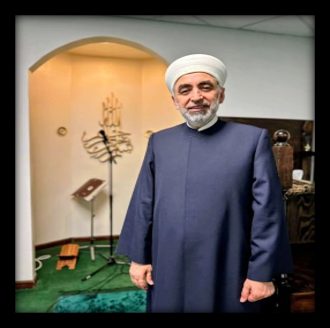
Now an Associate Professor of Religion at Notre Dame of Maryland University and President of the Islamic Affairs Council of Maryland, Imam Arafat continues teaching a new generation. His Syrian heritage and deep Islamic scholarship enrich his contributions to American civic life.
Students sometimes ask, "After all these years, all this work, has it made a difference?"
He reflects on YES students leading their own interfaith initiatives, police officers defending masjids, neighbors standing together after attacks, and the countless quiet moments that changed hearts.
"Every morning," he says, "I wake up and choose to believe in the possibility of friendship across differences. Not because the work is finished—it never will be—but because the alternative is unacceptable. We were created to get to know one another. That's not just a verse—it's a mandate. And I'm still answering that call."
Outside his office window, Baltimore continues in its diversity and complexity. Somewhere in the city, another conversation begins. Another bridge is being built. The work continues.