Guiding Hearts in Ellicott City
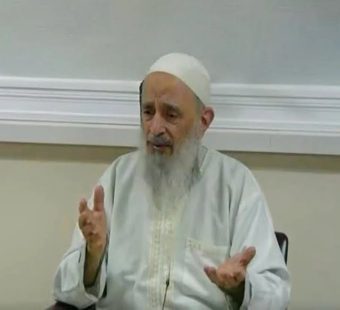
In the gentle twilight of a late-summer evening in Maryland, the young people of the community gathered on the carpeted floor of Maryum Islamic Center in Ellicott City. Among them sat Amir, Lina, and a handful of others — a mix of high‐schoolers and early‐twenties souls, navigating life in America, seeking something more. It was here that Imam Mahmoud Abdel-Hady stood before them, his voice warm and sincere, his message clear: this Masjid is your home; this Deen is your guidance; your peers can walk this path with you.
The Imam began by reminding them of the words of the Prophet ﷺ: “Whoever guides one person to good will have a reward like one who did it.” He explained that inviting young people to the Masjid and nurturing their connection to the Qur’an, the Sunnah and the community is an act of continuous charity. In a world of social media noise and fragmented communities, he asked:
“What if — by coming together right here, in this room, in this Masjid, you build something stronger than the algorithm; something that lasts for your soul, not just your feed?”
Amir felt his heart stir. He had grown up in the U.S., felt both belonging and dislocation: soccer games, AP classes, weekends with friends… but fewer places where faith and fellowship combined in his age group. Lina nodded as the Imam spoke of age-group gatherings, peer support, youth halaqa sessions where “people your age” could ask real questions — about identity, pressure, temptation, dreams rooted in Islam.
Imam Abdel-Hady shared his journey — over 30 years of service, first as the Imam of Dar Al‑Taqwa in Ellicott City for 19 years, now guiding the Maryum community and instructing with the Islamic Leadership Institute of America (ILIA). He did not tell them he was perfect. He told them he was committed. He offered Qur’an explanation, memorization and recitation classes. He supported marriage counselling, family programs, and inter-faith outreach. He emphasized the meaning of “practice” — it’s not just learning facts, it’s living the Deen in community, with friends who care.
“If you pray together, if you learn together, if you support each other in the Masjid — you will find that Islam becomes not just a set of rules, but a rhythm of your life.”
He invited them: join the brothers’ halaqa, join the sisters’ session, bring your friends, build your cohort. He spoke about the warmth of the weekly women’s halaqa (which he had helped facilitate) as a place of gentleness and growth for new revert sisters and long-time community members alike.
Then he painted a vision for their generation: a space where youths, college-age Muslims, young professionals meet after Jum’ah in the Masjid, study Qur’an together, volunteer together, host dialogues about their experiences in America. He said:
“When you see yourself not just as a ‘Muslim kid’ in a sea of other kids, but as a builder in the Masjid — you shape the future.”
He reminded them that his role has been inter-faith outreach and community capacity building. That’s because Islam in America must be lived visibly: service to neighbors, friendship across faiths, strength in knowledge and character. The young people listened: Lina thought of organizing a weekend Qur’an camp for her peers; Amir thought of mentoring younger kids after school at the Masjid.
As the session closed, Imam Abdel-Hady asked them to take a small step this week: attend one halaqa, bring one friend, learn one new verse of the Qur’an, volunteer once at the Masjid’s outreach program. He said:
“Small steps become habits; habits become character; character becomes legacy.”
Amir and Lina rose from their places. They exchanged glances. In their hearts, a spark of purpose flickered. They weren’t alone anymore — they had the Masjid, they had peers, they had a guide whose sincerity shone brightly.
Weeks have passed. In Masjid’s youth room, Amir helped lead a short recitation session. Lina helped schedule a movie night and discussion on faith & identity. Their circle grew. The Imam watched from a quiet corner, offering guidance, quietly proud. The Masjid’s doors stayed open, not just on Fridays but for knowledge, community and growth.
In the shade of Ellicott City’s trees, with the call to salah echoing across lawns, the young generation began to feel anchored. Anchored in Islam, anchored in community, anchored in the Masjid. Guided by wisdom, supported by peers, inspired by the sincere service of Imam Mahmoud Abdel-Hady.
And so the story continues — one young heart at a time, one halaqa at a time, one moment of sincerity forging a generation of practitioners.