The Pen, the People, the Purpose
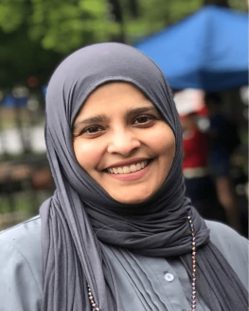
In the heart of Maryland, where Masajid hum with prayer and communities’ pulse with purpose, Hena Zuberi emerged as a journalist whose ink was never neutral—it was principled, purposeful, and prophetic. Her pen did not merely report; it bore witness. Her words did not just inform; they inspired.
As Editor-in-Chief ofMuslimMatters.org, Hena championed a journalism rooted in integrity. She refused to dilute truth for comfort or compromise justice for popularity. Her editorials uplifted the unheard—immigrant mothers, displaced refugees, Muslim youth navigating identity—and held power to account with clarity and compassion.
At the Islamic Society of Gaithersburg (ISG-MD), she was more than a guest speaker—she was a community architect. She convened civic forums, moderated interfaith panels, and mentored young women to step into leadership with confidence and faith. Her presence at town halls and masjid gatherings reminded many that journalism is not just about headlines—it’s about healing.
Her media journey spanned continents—from CNBC Asia to grassroots reporting for The Muslim Link—but it was in Maryland that her activism found its deepest resonance. Whether lobbying on Capitol Hill for global justice or anchoring the “Justice For All Now Show” on Muslim Network TV, Hena connected local stories to global struggles, always amplifying the moral voice of the Muslim community.
Her advocacy was never performative—it was personal. She co-founded food pantries like RashidunDC, mentored aspiring writers, and hosted intimate salon-style gatherings in Gaithersburg where faith, identity, and civic duty were discussed over tea. She believed that journalism must be paired with service, and that truth must walk hand-in-hand with mercy.
Her workshops—like “Growing Up With God”—empowered youth to see activism as ibadah (worship), and storytelling as a sacred trust. Her lectures at universities and her writings on race, interfaith cooperation, and human rights helped shift the narrative from “Muslims as subjects” to “Muslims as shapers of society.”
Her life was a living Tafsir of this verse:
"And do not mix the truth with falsehood or conceal the truth while you know [it]." Surah Al-Baqarah (2:42)
Hena Zuberi’s legacy teaches us that honest journalism is a form of jihad—a striving for truth in a world of distortion. She continues to show that the editor’s desk and the activist’s podium are not separate callings—they are one. And in her quiet, consistent way, Hena built a bridge between conscience and community, between faith and freedom.