The Steady Hand
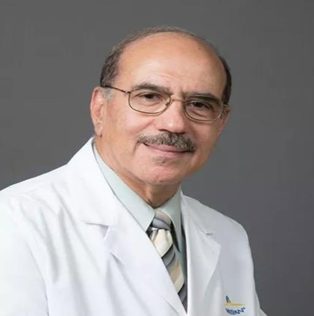
Dr. Yaseen Tomhe's hands never shook, not even when the world around him trembled. In the operating room at WellSpan York Hospital, those same hands that had once walked the halls of Damascus University's College of Medicine now guided delicate vascular procedures with the precision that comes from decades of practice and an unshakeable faith in Allah's guidance.
But it was outside the hospital walls where Dr. Tomhe's true calling manifested most powerfully. In the early 1990s, as one of the founding presidents of the Islamic Society of Baltimore, he stood before a small but determined congregation, his voice steady as he spoke about their vision for Masjid Al-Rahmah. The foundation was being poured, brick by brick, prayer by prayer, and Yaseen knew that they were building more than just a masjid—they were creating a home for their community's soul.
Years later, when the Syrian conflict erupted like a wound across his homeland, Dr. Tomhe felt the pain in ways that went beyond the headlines. His own family members became scattered by the violence, some trapped in cities under siege, others fleeing across borders with nothing but the clothes on their backs. Each phone call from Syria brought news that made his heart heavy, yet his faith remained his anchor.
It was during those dark years that he experienced something he had never anticipated in America—the cold turning of faces, the suspicious glances, the way some colleagues suddenly found reasons to avoid conversation. When certain media outlets began painting all Syrians with the broad brush of suspicion, Dr. Tomhe found himself defending not just his heritage, but his very presence in the community he had served for decades.
"There were nights," he would later confide to close friends, "when I would finish a twelve-hour surgery, having saved lives without regard for the patient's race or religion, only to come home and see my people—my Syria—portrayed as nothing but a source of fear. The Prophet, peace be upon him, said 'The believers in their mutual kindness, compassion, and sympathy are just one body; when a limb suffers, the whole body responds to it with wakefulness and fever.' But I felt as though parts of this body had gone numb to our pain."
The ache deepened when personal tragedy struck. The loss of his beloved wife left a void that seemed impossible to fill, and then came the devastating blow—the tragic death of his young adult son. In those moments, Dr. Tomhe understood Job's trials in ways he had never imagined. "And give good tidings to the patient, who, when disaster strikes them, say, 'Indeed we belong to Allah, and indeed to Him we will return,'" he whispered through his tears, the words from Surah Al-Baqarah becoming both his refuge and his strength.
Yet even in his darkest hours, Dr. Tomhe's vision for community never dimmed. Working alongside his dear friend Al Khatib, a successful businessman who shared his commitment to service, they established the An-Nur Foundation of Maryland in White Marsh. Masjid An-Nur became more than a place of worship—it became a beacon of hope, offering Islamic education, Quran classes, and social services to anyone in need, regardless of their background.
"And We made from them leaders guiding by Our command when they were patient and were certain of Our signs," Dr. Tomhe would reflect on the verse from Surah As-Sajdah as he watched children learning Arabic in the masjid's classrooms, their laughter echoing through halls that had been built with love and sustained by faith.
Standing in Masjid An-Nur during Friday prayers, surrounded by faces from Syria, Pakistan, Somalia, and converts from across America, Dr. Tomhe would sometimes close his eyes and remember that young medical student in Damascus, dreaming of serving others. He had crossed an ocean, weathered storms of prejudice and personal loss, but he had never stopped believing in the fundamental goodness of people and the healing power of community.
His hands, still steady as ever, would rise in supplication, knowing that every surgery he performed, every life he touched, every bridge he built between communities was a testament to the verse that had always guided him: "And We made from them leaders guiding by Our command."
The community he had helped nurture would forever be his greatest operation, his most successful transplant—the grafting of hope onto the heart of a new homeland, ensuring that future generations would have the spiritual home their parents had dreamed of but never thought they'd see.