Legacy of Healing & Hope
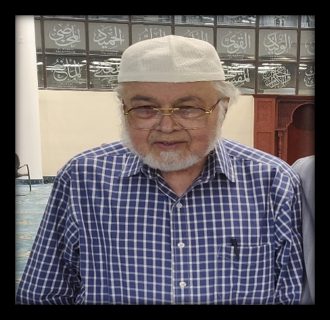
The late 1970s were a period of significant transformation in the Sultanate of Oman, and Dr. Ashruf played a pivotal role during this era. As the personal physician to Sultan Qaboos bin Said Al Said, he was entrusted with the health and wellbeing of one of the region’s most influential leaders. Yet, for Dr. Ashruf, medicine was not simply about treating illness. It was a calling rooted in service and compassion, touching lives well beyond the opulent halls of the palace.
Born into a humble yet prosperous family in Hyderabad, India, Dr. Ashruf’s upbringing instilled in him a profound sense of responsibility. Although his professional journey carried him across continents, his heart remained firmly connected to his origins. In Oman, he was respected not just for his medical expertise, but also for his wisdom and kindness—a quiet yet powerful influence in a kingdom forging its future.
When his years of service in Oman drew to a close, Dr. Ashruf’s journey was far from finished. Upon arriving in America, he quickly recongnized a new kind of need: not simply for physical healing, but for comfort and hope among Muslim families striving to secure their children’s future in a new land.
Dr. Ashruf’s arrival in the United States brought an acute awareness of the challenges faced by both Muslim immigrants and local families. He saw the importance of creating a space where faith, education, and community could flourish together.
Recognizing this need, Dr. Ashruf and other pioneers began to convene at Johns Hopkins Shaffer Hall. Their gatherings became a beacon for those who sought to build something enduring. Through planning, dreaming, and collaboration, the Islamic Society of Baltimore (ISB) was founded—a community built on love, foresight, and shared values.
During these formative days, a group of visionaries—including physicians, scholars, and concerned parents—would meet on weekends. Among them were Dr. Mohamed Z. Awad, an Egyptian-born physician, Dr. Zulfiqar Awan, Dr. Shaukat Yousuf Khan, Dr. Syed Sajid Husain, and three African American Muslims: Yusuf M. El-Abdullah, Salativel Bey, and Aly T. Holley. Their vision and leadership were instrumental in the formal incorporation of the Islamic Society of Baltimore in 1969.
As the decades unfolded, Dr. Ashruf’s dedication to serving others remained steadfast. The same capable hands that once managed urgent medical crises and earned the confidence of royalty continued their work far beyond the walls of palaces. Dr. Ashruf channeled his energy into education, working tirelessly to ensure that countless children were given opportunities to thrive. His generosity was boundless, extending from India to the United States, always led by an unwavering sense of duty that never faded.
Now, as the passage of time gently slows his steps, the legacy of Dr. Ashruf has never been more apparent. His children, each finding success in their respective fields, serve as living proof of the values he instilled and the commitment by which he lived. Even as his pace has softened, the depth of his influence remains—his life a story of healing, sacrifice, and enduring service that continues to inspire all who encounter it.
For Dr. Ashruf, the true measure of life was never found in titles or accolades. Instead, it was defined by the lives he touched, the futures he shaped, and the quiet resilience of a man who gave of himself without seeking recognition. His every action reflected a deep belief in the nobility of service as life’s highest calling.
In the early days, the meetings that Dr. Ashruf attended became more than simple discussions; they formed the foundation of a lasting community. Families gathered to pray together, study Arabic, and reflect on religious teachings, united by the shared hope that their children would grow up with a strong sense of Islamic identity. The momentum of these gatherings soon extended beyond the confines of Shaffer Hall, as the community’s shared vision led them to raise funds for a dedicated mosque.
With strong ties to Indian Muslim communities and a steadfast devotion to education, Dr. Ashruf played a crucial role in shaping the mission of the Islamic Society. His generosity was felt both in Baltimore and abroad, supporting families in India and the United States, ensuring that children could access education and those in need received comfort and support. His efforts bridged continents and communities, reinforcing a spirit of compassion and collective responsibility.
By the late 1970s, the Islamic Society of Baltimore had expanded to serve more than a hundred families, with the goal of establishing a permanent home for the community becoming a reality. The society acquired land on Johnnycake Road, and by the mid-1980s, Masjid Al-Rahmah was established. What began as the vision of a small group of pioneers flourished into a vibrant institution, providing not only a place of worship but also schools, nurseries, and essential services to the community.
Decades later, Dr. Ashruf’s influence remains woven into the very fabric of the ISB. Though his health now limits his daily involvement, his contributions endure through the changes of life, the families supported, and the community he helped to shape. His children, continuing to excel in their professions, carry forward his values, ensuring that his legacy of service continues to inspire future generations.
Dr. Ashruf’s journey is more than a narrative of medical accomplishment or community leadership. Above all, it stands as a testament to vision, sacrifice, and unwavering faith lessons in the enduring power of service.