Building Community Through Service
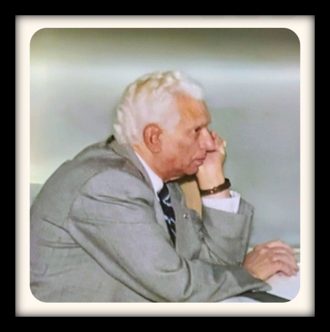
Dr. Mohamed Zein Awad's life was defined by a steadfast commitment to knowledge, faith, and service. Born in Zagazig, Egypt, he demonstrated a love of learning from an early age—an enduring trait that would shape his path across continents. His academic excellence was apparent during his years at the University of Alexandria, where he not only excelled in his studies but also earned recognition from the King of Egypt for his achievements. This early distinction inspired him to continue his academic journey at the University of London, where he further established his reputation as a dedicated scholar.
Dr. Awad's pursuit of scholarly excellence was further recognized when he was awarded a prestigious Fulbright scholarship, allowing him to study in the United States. During this formative period, he had the unique honor of meeting President John F. Kennedy—an encounter that underscored the high esteem in which he was held within academic circles. This chapter of international study marked the beginning of a new stage in his life, ultimately leading him to settle in the United States.
After his arrival in America, Dr. Awad became closely involved with the nascent Islamic Society of Baltimore. He played a pivotal role in nurturing the local Muslim community, helping to evolve modest weekly gatherings at Johns Hopkins University's Shaffer Hall into a vibrant congregation with its own dedicated center in Catonsville, Maryland. Through his leadership and vision, Dr. Awad not only advanced the causes of education and faith but also laid the groundwork for a strong and inclusive community that would endure for generations.
Arriving in Baltimore in 1967 with his wife, two sons, and daughter, Dr. Awad embarked on a new chapter marked by devotion to service. He joined the University of Maryland School of Medicine and simultaneously contributed to establishing a thriving Muslim community in the Baltimore area. At a time when local Muslims were few and scattered, he brought people together for Friday prayers at locations such as the University of Maryland and Johns Hopkins University. It was through these communal moments that he recognized the need for unity and a dedicated place for Muslims to practice their faith and build fellowship.
With the steadfast support of his close friends, Dr. Awad played a pivotal role in bringing together individuals within the burgeoning Muslim community. He was central to transforming informal prayer gatherings into an organized and cohesive group, fostering a sense of unity and shared purpose. In the late 1960s, this spirit of collaboration led to the establishment of Sunday school classes at Johns Hopkins University’s Shaffer Hall, which proved to be a cornerstone for the community’s religious education and spiritual development. Dr. Awad stood among the earliest visionaries whose thoughtful discussions and collective efforts laid the foundations for what would become the Islamic Society of Baltimore. Their shared aspiration was to create an enduring institution; one built to nurture and serve future generations.
The Islamic Society of Baltimore was officially established in 1969 by three Muslim physicians, including Dr. Awad. Their shared vision was to create an institution that would support the Muslim community in preserving their religious identity and passing their Islamic heritage onto future generations, despite the significant pressures of assimilation. The founders sought to foster an environment where faith could be maintained, and cultural values could be sustained for both adults and children.
With a firm commitment to Islamic principles, Dr. Awad took an active role in nurturing the youth and empowering women within the community. He was instrumental in establishing spaces dedicated to spiritual growth, education, and meaningful participation. These efforts ensured that younger generations and women had opportunities to learn, develop, and contribute, thereby strengthening the communal bonds and fostering an inclusive and vibrant atmosphere for all members.
Dr. Awad’s commitment to the Muslim community was demonstrated through both his visionary leadership and his practical contributions. Not content with conceptual planning alone, he established his own medical laboratory and, recognizing the needs of his fellow Muslims in the Towson area, graciously opened its doors for Friday prayers. This gesture created a welcoming and inclusive space, allowing worshippers to gather for spiritual reflection and to foster a deeper sense of belonging. Family memories frequently recall Dr. Awad’s presence at these gatherings, where he offered guidance, reassurance, and support in a humble setting that, over time, evolved into a cherished sanctuary for many.
Driven by a shared aim, members of the community worked together with resolve to secure a permanent place of worship. Muslim women played an integral role in this mission. They organized bazaars and sold handmade goods, as well as valued personal items, to raise the funds needed for their cause. Thanks to these collective efforts, the community was able to identify and ultimately purchase land, marking a significant milestone in their journey to establish a dedicated Islamic center.
After relocating to Chicago in 1970, Dr. Awad remained closely involved with Muslim organizations, continuing his lifelong devotion to service and communal progress. Upon returning to Baltimore in 1979, he resumed his leadership role within the Islamic Society of Baltimore, serving as president from 1981 to 1982. During this period, he guided society through a time of considerable growth and consolidation.
Dr. Awad’s life, much like the journeys of many immigrants, was marked by perseverance, faith, hope, and sacrifice. Throughout every transition and obstacle, he remained unwavering in his beliefs, living by the Quranic principle that all are equal before God and true value is found in righteousness. His life exemplified humility and service, wholly devoted to building a resilient and vibrant community [Surah Al-Hujurat 49:13].
As a result of his dedication, what began as a small group gathering for weekly prayers has grown into a lasting institution that continues to support Baltimore’s Muslim community to this day.
Dr. Mohamed Z. Awad’s enduring legacy is defined by his scholarship, leadership, and steadfast devotion. His influence is evident in the vibrant institutions he helped establish, the community he cultivated, and the countless individuals who continue to benefit from his vision and unwavering faith. Through his tireless efforts, Dr. Awad created spaces for spiritual growth and educational advancement, laying a foundation that supports generations of Muslims in Baltimore and beyond. The values he embodied—learning, service, and commitment to community—are reflected not only in his achievements but also in the lives of his children, grandchildren, and great-grandchildren. They carry forward his principles, sustaining his spirit of devotion and inspiring others to follow in his footsteps. His remarkable journey serves as a reminder that true leadership is measured by the lasting impact it has on others, and his legacy will continue to inspire many generations to come.
Written by: Ahmed G. Awad, Nadia Awad, and Iman Awad